Would pumping more resources into government schools help improve them?
The core problem in government schools is weak incentives that lead to bad investments, not insufficient funding. Without addressing these deeper problems, pumping more resources is unlikely to yield any significant gains. The government already spends between INR 15,000 and INR 70,000 per child annually. In Delhi, for instance, it was INR 69,736 in 2021-22. But these don’t necessarily translate into better performance. Despite the budget for school education increasing by 78% between 2014 and 2023, learning gains during this period were minimal. This paradox shows that existing resources are poorly allocated rather than inadequate. Without fixing the underlying incentive problems, pumping in more money will not improve outcomes.
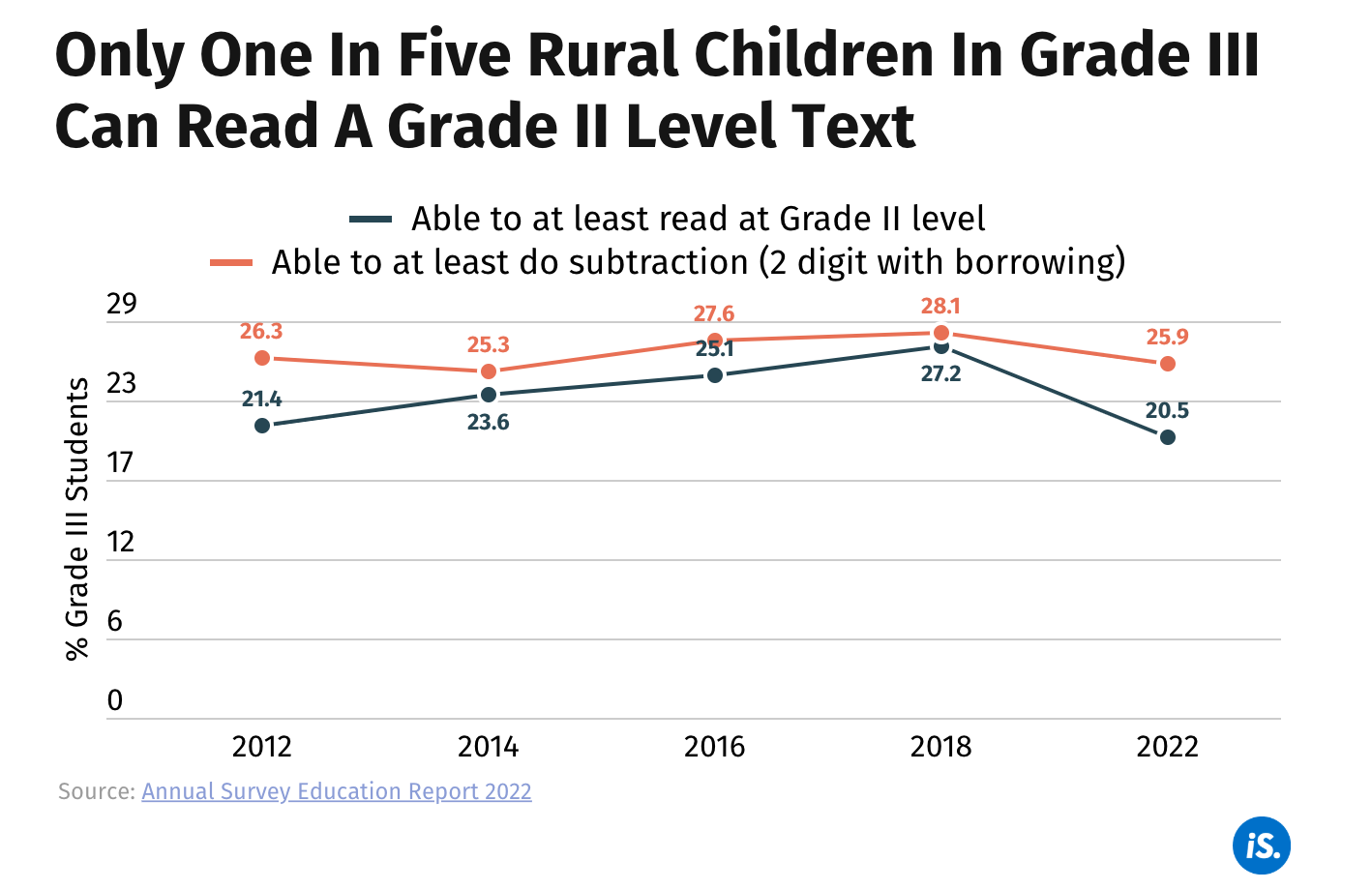 Source: IndiaSpend. 2024
The importance of incentives becomes clearer when comparing government schools with private schools. Private schools are 2.5 to 5 times more cost-effective in improving learning outcomes, depending on the state. This gap exists because private schools face different incentives that align spending with learning outcomes. The difference in cost-effectiveness confirms that the problem lies in how resources are used, not how much is available. There is little evidence that spending more per child improves learning outcomes. More resources are therefore unlikely to solve the problem.
Comments
Discussion is moderated. Sign in with GitHub to leave a comment — comments are reviewed by the Centre for Civil Society team before publishing. To request removal of a comment, email contact@ccs.in.
Sign in with your GitHub account to leave a comment. Comments are reviewed by the Centre for Civil Society team before they appear publicly.